Learn More About Heat Pumps
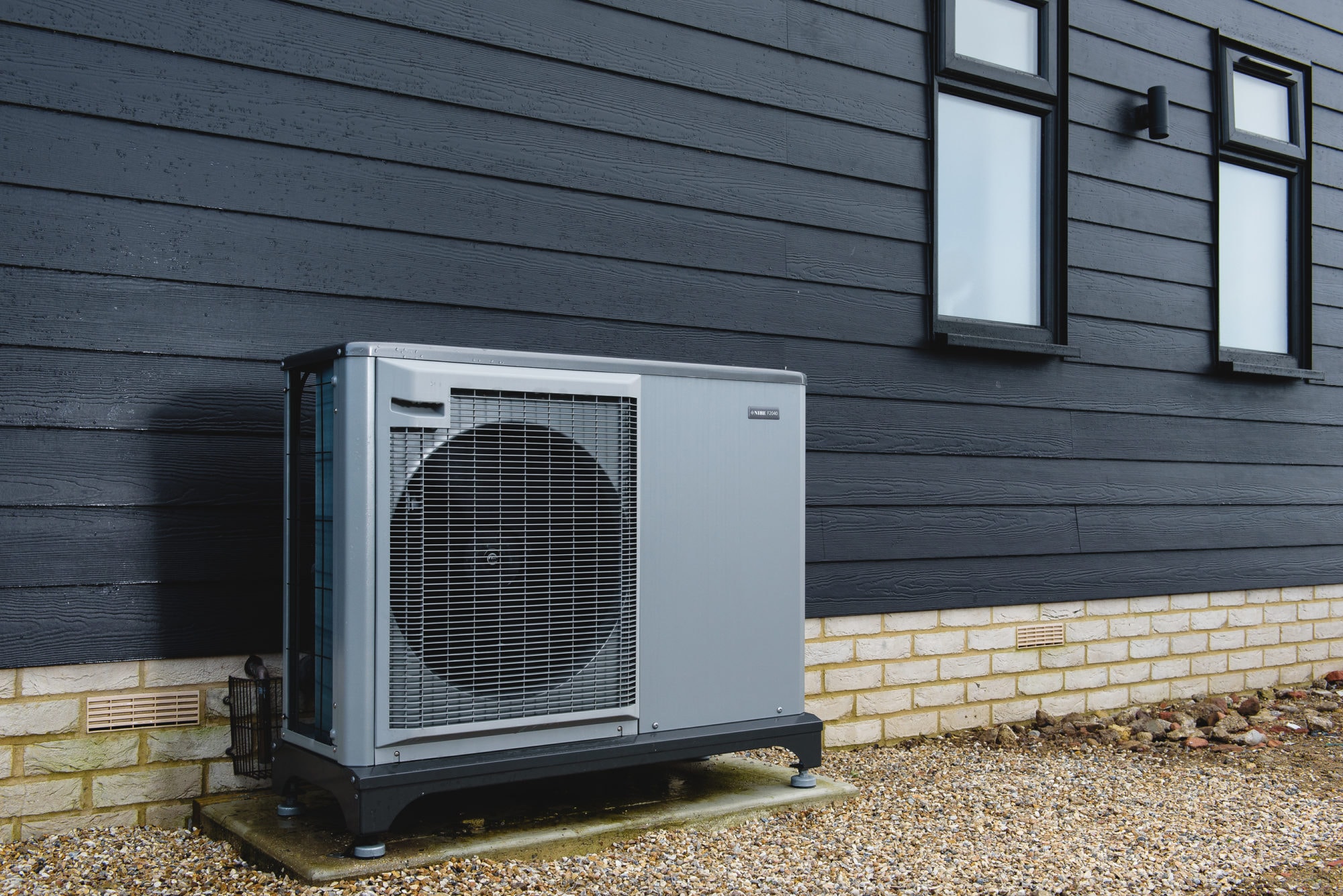
Summary: Find out if a Heat Pump system can help make your home more efficient and comfortable, while reducing your environmental impact.
Description
Electrifying your home heating and cooling system with a heat pump is one of the most effective ways to reduce your overall carbon footprint and make your home more comfortable. Heat pumps are 2 to 4 times as efficient as fossil-fuel based systems, and since they use electricity which is increasingly from renewable sources, you will be taking an important step to reduce greenhouse gas emissions.
An ideal time to consider a heat pump is when your existing heating or cooling system is older and may need to be replaced in the next year or two, or when you want to add air conditioning - because heat pumps provide high-efficiency cooling as well as heating. It's best not to wait until your existing system is close to failure, so you can plan ahead and consider options carefully instead of in a rush. Energy Help Northampton is here to help you understand the steps to take along the way towards a more efficient and comfortable home environment.
Deep Dive
Watch a 1.5 hour long presentation about Heat Pumps given by Dr Ben Weil of the CAPA office of the city of Northampton, MA. Click to watch or download the video.
If you want to download the video and watch at your leasure, please feel free. It will take a while as it is about 4.5 GB. The download option is available from the same link.
Click Here to download the presentation slides from the event.
Heat pumps work much the way your refrigerator does, by circulating a liquid called a refrigerant through a cycle of evaporation and condensation. During the heating season, a heat pump moves heat from the outside (air or ground) to your home. Since the air and ground always contains some heat, a heat pump can extract that heat even on cold winter days. During the summer, a heat pump cools just like an air conditioner, by transferring heat from inside to the outside.
Air source heat pumps have two parts: an outdoor condensing unit and one or more indoor air handling units, connected by a conduit through the wall. Some are ductless and some use ducts.
Ground source heat pumps also have mutiple parts: an outdoor fluid loop consisting of underground piping, and an indoor unit that extracts heat or cold from the refrigerant fluid. This heat or cold is transferred to indoor air via and air-handler and is most often distributed through ductwork.
Before considering the exact kind of heat pump suitable for your home, it's important to take steps to increase the efficiency of your home by reducing air leaks and energy loss with sealing and insulation. If you haven't had a Mass Save energy audit in the last few years, you can make a big difference in your energy use and comfort by scheduling an audit. You can do this by visiting Mass Save's Energy Assessment Website... or by calling 866-527-7283.
As part of an energy audit you may be given a list of weatherization measures that you can take, along with an estimated cost after incentives. These measures will likely increase your home's efficiency and comfort, and by taking them you may also then qualify for incentives on heat pumps. Learn more by visiting Mass Save's Weatherization Incentives Website
Once your home is properly weatherized, your heating and/or cooling system will likely operate more efficiently and may save you money on operating costs. Along with any such savings, state and federal incentives may allow you to afford a new heat pump system to meet your needs. Learn about the different kinds of heat pumps by visiting Mass Save's Heat Pump Website
You can find more information on several kinds of heat pump heating and cooling technologies and the available incentives that will lower their cost on Mass Save's website:
Finally, for further guidance on whether and whether and how these technologies may be able to improve the efficiency and comfort of your home, you can request the help of an energy coach here.
Frequently asked questions:
I heard heat pumps don’t work in New England.
Previous generations of heat pumps were best suited for more temperate climates and could not efficiently deliver sufficient heat during the coldest New England winter months. However, today's "Cold Climate Heat Pumps" provide customers with a highly effective space heating and cooling performance that is readily available at a reasonable cost. Modern heat pumps are based on the original concept but employ decades of technological advancements in performance and efficiency, with specialized features that enable them to provide reliable, effective heating below 15-20 degrees F, with many models operating at outdoor temperatures as low as -20 degrees F.
Doesn’t it cost more to heat with electricity?
It can, depending on the fuel used in your existing system and how cold it is outside. Heat Pump operating costs can be marginally higher if you have an efficient gas-fired furnace or boiler. Generally though, because heat pumps move heat rather than generate it, they can heat and cool at a significantly lower operating cost than other systems. In fact, The Northeast Energy Efficiency Partnerships found that in the Northeast and Mid-Atlantic regions air source heat pumps save around 3,000 kWh (or $459) when compared to electric resistance heaters, and 6,200 kWh (or $948) when compared to oil systems. When displacing oil (i.e., the oil system remains, but operates less frequently), the average annual savings are near 3,000 kWh (or about $300).
Do I have to replace my entire existing heating system to use heat pumps?
Heat pumps work with most heating systems, such as forced hot air, radiators, or radiant (floor) heat. They can also be “ductless,” in which case they transfer warm or cool air directly into the house. Some people choose to install heat pumps on top of their legacy heating system, so that the old system can kick in if temperatures get very cold.
Types of Air-Source Heat Pumps
Some different kinds of heat pump systems are described below.
Ductless vs. Ducted vs. Short-Run Ducted
Ductless applications require minimal construction as only a three-inch hole through the wall is required to connect the outdoor condenser and the indoor heads. Ductless systems are often installed in additions.
Ducted systems simply use ductwork. If your home already has a ventilation system or the home will be a new construction, you might consider this system.
Compact-ducted systems utilize shorter runs of smaller diameter ductwork designed to serve a section of the house. Short-run ducted systems are most often complemented by other ductless units for the remainder of the house.
Multi-Zone vs. Single-Zone
Single-zone systems are designed for a single room with one outdoor condenser matched to one indoor head.
Multi-zone installations can have two or more indoor heads connected to one outdoor condenser. Multi-zone indoor heads vary by size and style and each creates its own "zone" of comfort, allowing you to heat or cool individual rooms, hallways, and open spaces. This distinction may also be referred to as "multi-head vs. single-head" and "multi-port vs. single-port."
How do I decide which kind of heat pump is right for my home?
There are several options for learning more about heat pumps and how a heat pump system can serve your home heating & cooling needs:
- Schedule a Mass Save Decarbonization Consultation by visiting :Mass Save's Decarbonization Consultation Website
- Check out Energy Help Northampton's coaching services here.
- Qualified installers can be helpful if they spend the time to understand your home's characteristics, your heating and cooling needs, and then explain your options.
- If you want to learn more right now, check out this buying guide developed by Northeast Energy Efficiency Partnerships (NEEP). (NEEP is "a regional nonprofit that works to accelerate energy efficiency, electrification, and grid flexibility in the building sector as a core strategy to reduce climate pollution and build an affordable, sustainable, and resilient energy future.")
Steps to Take
- Schedule an energy audit by visiting the MassSave Website ... or by calling 866-527-7283.
- Weatherize your home - your energy auditor should provide you with a list of measures you can take and the incentives that will cover much of the costs. Learn more by visiting Mass Save's Insulation Incentive Website
- Learn more about heat pumps and the incentives available to you - by visiting Mass Save's Heat Pump Incentive Website
- Find qualified heat pump installers in your area by visiting Mass Save's Heat Pump Installers Website
- For more guidance on how to navigate these steps, help understanding how heat pumps can serve your needs, and whether you qualify for incentives - you can request help from an energy coach in your area. Click here to request help from a coach.